
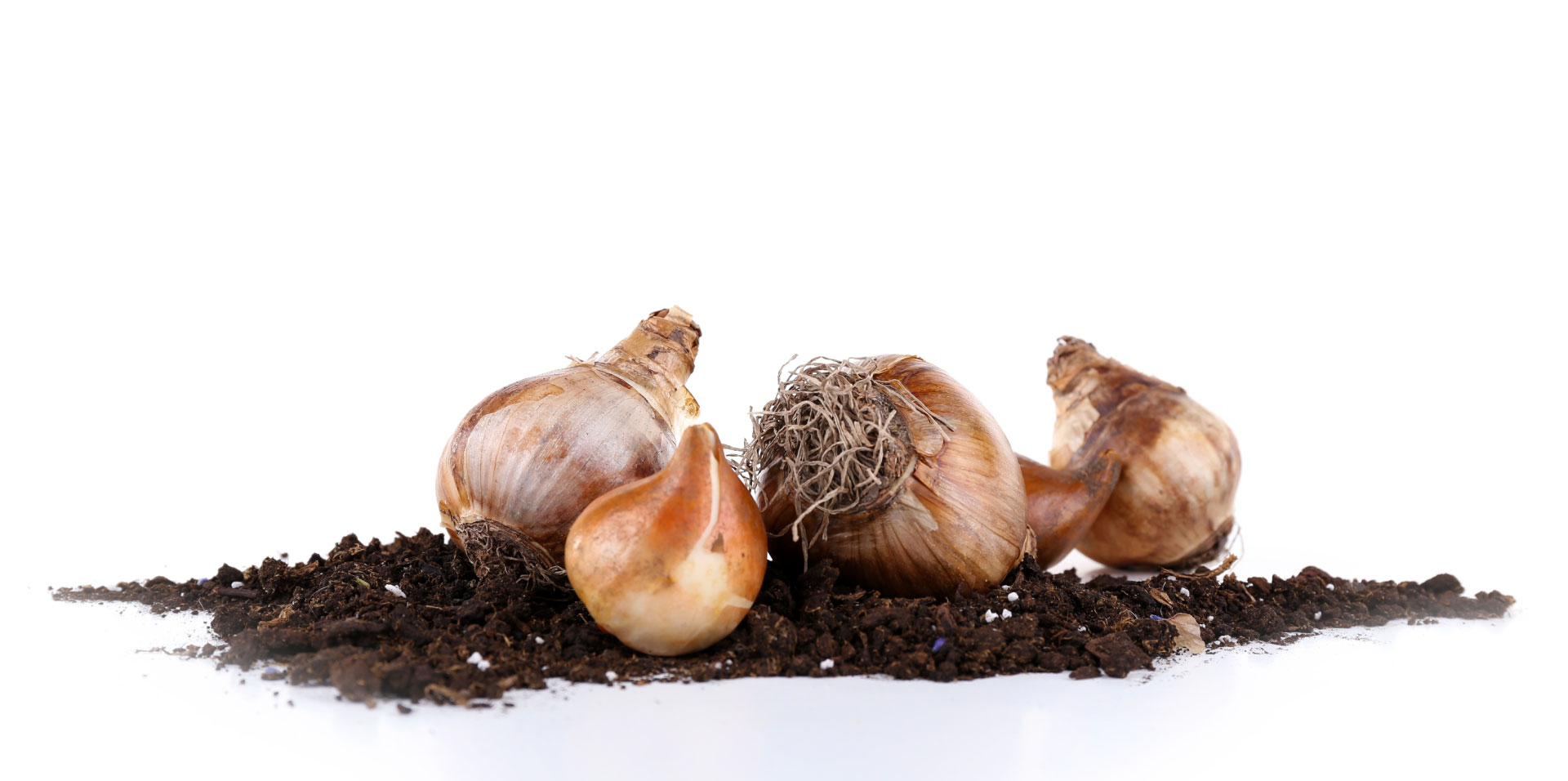
In parts of the world where summers are too hot or too dry for most plants to maintain growth, or where winters temporarily make growth impossible, evolution has produced a plant form that thrives. The term “bulb” has a distinct structural definition separate from corms, tubers, rhizomes and tuberous roots but these all share characteristics of buds and fleshy storage material underground. They are all loosely called “bulbs”.
Bulbs behave in some ways like seeds. Each is a storehouse of energy and resources (nutrients and moisture), gathered only while spring soils are moist, that will carry the plant through the harshest conditions in a dormant “sleeping” state until spring conditions stimulate growth the following year. Like the root systems of other hardy herbaceous perennials, bulbs are essentially chemical “batteries” that are able to convert stored energy into brilliant flowers (very energy expensive) and into high-tech solar panels (leaves). The leaves combine abundant CO2 and sunlight to recharge the bulb (the battery) after flowering. Our native bulbs include species of Allium, Brodea, Camassia, Calochortus, Erythronium, Fritillaria, Lily, and Triteleia among others.
Bulbs are delightful anywhere you plant them, along the street, around a mailbox, in a rock garden, a wildflower meadow, under trees and shrubs, or even throughout your lawn.
- Adding a long-lasting organic or mineral fertilizer with nitrogen and ample phosphorus will encourage strong roots and large blooms for the spring AFTER next. Plant food applied now will help the bulb recharge after next spring’s bloom. Biosol, Fish Bone Meal, or Soft Rock Phosphate are natural fertilizers for bulbs.
- Bulbs thrive in loose, organic soil with good drainage. Amend our concrete-like mineral soils with a finished compost (Kellogg’s Amend, with rice-hulls, is our go-to for bulbs). Add ~25% compost (along with organic fertilizer) to help keep the soil from compressing around the bulbs as they increase their colonies over the years.
- Many bulbs are extremely deer and rodent resistant. All of the hardy Narcissus species (including Daffodils) that thrive in our climate and persist for decades, will bloom every spring without ever being molested. Allium, Colchicum, Fritillaria, and Scilla, also have species with very strong repellence. A few bulbs are attractive to rodents. Large tulips and giant Crocus can be planted surrounded by sharp gravel or in a “root-guard” mesh bag (note: the smaller rock-garden tulips and bunch-flowering crocus are actually seldom eaten).
- In general, we start planting bulbs by mid-September. Bulbs can be planted from September through February if you store them in a cool dark location and if you can reach the soil (I have dug through several feet of snow and chipped up the frozen soil surface MANY times to plant bulbs in January). Bearded iris, and autumn blooming crocus should be planted early, August – September if possible. Some native bulbs are only available in small pots and we often carry species of Allium, Brodea, Camassia, Calochortus, Erythronium, Fritillaria, Lily, and Triteleia.
- Plant bulbs en masse. Bulbs look arresting when planted in patches and swaths. Dig one wide hole, 8 inches deep. Add compost and fertilizer, and place several (or many) bulbs in one wide hole. As a general rule, place bulbs twice as far apart as their diameters (e.g. plant 2” diameter daffodil bulbs 4” apart in a wide hole). Consider blooming time (March – July), height (1 inch – 4 feet), bloom size (1-10 inches) and color (every color of the rainbow to match with your other flowering shrubs and perennials). It’s great to plant smaller bulbs in a shallow layer above deeper larger bulbs for a greater effect in the same hole. Placing a few individually planted bulbs near the masses gives the impression of naturalization and planting individual bulbs in wildflower gardens is a common practice.
- As with ALL plantings, a loose woody mulch is beneficial (especially in colder areas with unreliable snow cover). Mulching shades and protects the soil, moderating temperature swings, slowing freezing and thawing, preventing soil moisture loss, and providing a lasting source of soil humus as the wood decomposes.
- After the flowers fade in early summer, the leaves are collecting CO2 and converting solar energy into chemical energy, the bulb is developing buds and storing resources for next year’s flowers. It is important to feed, and water, and encourage the bulbs to retain their green photosynthesizing leaves for as long as possible. Dead-heading bulbs after flowering routes more energy into the bulb instead-of the energy demanding seed-heads. Cut off only the seed heads and dead flowers, leave as much green stalk (photosynthetic potential) as possible. Remember this when cutting flowers to bring indoors. Taking flowers from bunches of Daffodils is beneficial to the bulb as long as you leave plenty of foliage.
Bulbs in a lawn give your garden an early playful appearance of a wild meadow. They bloom and fade long before you’ll ever need to mow. Snow Crocus, Scilla and Chionodoxa are all excellent candidates for lawn bulbs. Plant in wide drifts of like colors.
Woodland plantings use bulbs that “naturalize” (adapt and spread) in open shade. Bulbs add a cheerful display before many woodland perennials will be in bloom. Rock-garden and “woodland” type Narcissus, Ice Follies daffodil, Anemone, Chionodoxa, Crocus and Scilla planted along with ostrich and lady fern, coral bells, bleeding heart, forget-me-nots, sweet woodruff and Hosta make a beautiful woodland planting. Bulbs are incredibly easy and infinitely satisfying and should always be included in “wildflower” gardens.
Planting in pots and barrels outdoors can be a little tricky. Make sure you provide for ample drainage. In a large wine barrel, plant bulbs as you would in the garden and, if possible, keep the barrel out of the sun for the winter to avoid thawing / freezing cycles that can kill the bulbs; the larger the container the better your chances for success. In smaller wooden pots it seems to work well to bury the entire container under a foot or more of pine needles in a shady spot.
Autumn Crocus and Colchicum are hardy bulbs that bloom in the fall. In spring, they have only leaves that work to collect and store energy as buds develop. Autumn Crocus then go dormant for most of the summer. In fall, the bulbs produce only flowers when the rest of the garden is going to sleep. If purchased in fall, the bulbs will bloom whether planted or just sitting on the counter. If planted indoors it is nice to grow a little grass in the pot to compliment the beautiful pink flowers. After blooming indoors, plant the bulb into the garden to be enjoyed for decades to come.
Many of the hardy outdoor bulb varieties can be “forced”, with chilling, to bloom indoors. Hyacinths are probably the most widely forced bulbs because of their sweet fragrance, compact size and ease. Hyacinths (and Crocus) bulbs can be planted in small pots, just below the soil surface and kept moist in a cool, dark room or closet. Neither is very picky. When the leaves reach about 2” (8-12 weeks) bring them out into the sun. Anemone, Grape Hyacinth, Scilla, Chionodoxa, Daffodils and Tulips can all also be forced but require very specific temperatures and chilling periods.
There are many bulbs that bloom well inside the house without forcing. Amaryllis and paperwhite bulbs will bloom profusely without any chilling. The larger the bulb, the more blooms you’ll get.
Spring Flowering Bulbs
Look at the pictures on the bins for planting ideas when you’re making your bulb selections.
Bulbs in a lawn give your garden an early playful appearance of a wild meadow. They’ll bloom and fade long before you’ll ever need to mow. Crocus, Scilla and Chionodoxa are all excellent candidates for lawn bulbs. Plant in wide drifts of like colors and in time they will spread.
Woodland plantings use bulbs which “naturalize” (adapt and spread) in open shade. Bulbs add a cheerful display before many woodland perennials will be in bloom. “Woodland” Narcissus, Ice Follies daffodil, Anemone, Chionodoxa, Crocus and Scilla planted along with Ostrich and Lady fern, Coral bells, Bleeding heart, Forget-me-nots, Sweet woodruff and Hosta make a beautiful woodland planting.
Planting in pots and barrels outdoors can be tricky (also see Forcing, below). The larger the container the better your chances for success. Make sure you provide for ample drainage. In a large wine barrel, plant bulbs as you would in the garden and keep the barrel out of the sun for the winter to avoid thawing / freezing cycles that will destroy the bulbs. In smaller wooden pots it seems to work well to bury the entire container under a foot or more of pine needles in a shady spot. Clay pots usually disintegrate in our winters and are not the best choice.
Remember that after the flowers fade, the bulb is developing buds and storing up nutrients for next year’s flowers. This is a most important time to feed, water and encourage the bulbs to retain their green leaves for as long as possible. Also, fertilization each fall by scratching bulb food or bone meal into the soil greatly increases bulb performance. Remember this when cutting flowers to bring indoors. Taking a few flowers from a bunch of daffodils is of little consequence since there are many leaves, but tulips with the leaves and flowers on the same stem may not return if the leaves are cut down.
It is good practice to cut dead flowers from as high on the stem as possible to retain the green and keep plants from making seed that will rob the bulb portion of the plant of nutrients.
When bulbs have increased in a location beyond their means (this is evident when there is more and more foliage with fewer flowers) it is time to divide. Late spring, as the foliage is just beginning to fade, is a good time to dig up the bulbs, pull them apart and replant them in new locations with the foliage intact. This may be done in fall as well.
Types of bulbs
Narcissus species are perfect flowering perennial bulbs that may be fragrant, will bloom every year without irrigation, are never eaten by rodents or deer and make great cut flowers. Narcissus is the Latin name for a Genus of plants which includes such well known favorites as daffodils and paperwhites. Narcissus are available in all shades of yellow, white, oranges, and in recent years, reds and pinks. King Alfred, the best known yellow trumpet daffodil was introduced in 1899.
Tulip species range from beautiful wild rock-garden varieties to branching, multi-flowered garden varieties, fragrant varieties, and huge, giant flowering varieties. Tulips are available in every color and no other bulb rivals their mass effect. Tulips are, however, eaten on occasion by voles, gophers, and squirrels. Prevent this problem with a simple barrier of hardware cloth (wire mesh with ~1/2 inch holes) placed over and under the bulbs when they are planted. Bird netting has also been used with fair results. Planting with garlic and spraying the bulbs with repellents, such as Ropel or Liquid Fence has also offered some protection.
There are many other types of bulbs which will thrive and naturalize in our mountain environment. Some bulbs are large like the Giant Alliums (the Queen of Bulbs), some with flower heads up to 12″ across, or small like the spreading bunch-flowering crocus which are the best bulb for naturalizing.
When should bulbs be planted?
In Truckee the planting time depends upon your location. In general, high altitude areas should plant in late September and high desert areas plant in late October or early November, depending on the weather. It is fine to plant until the soil is too frozen to work. (“I’ve had good results planting Daffodils in January and once in March!” e.)
Forcing hardy bulbs to bloom indoors
Many of the hardy outdoor bulb varieties can be “forced” to bloom indoors. Hyacinths are probably the most widely forced bulb because of their sweet fragrance, compact size and ease. Often special bulb forcing glasses or ceramic pots are used to enhance the effect. We offer Hyacinths in the largest, “forcing” size for better indoor blooms. These also are the best in the garden. Anemone, Crocus, Grape Hyacinth, Scilla, Chionodoxa, Daffodils and Tulips can all be “forced”.
Pot the bulbs into well-draining potting soil with the tips just at the soil line. Water them in and set the pot in a cold (but not freezing: 35-45°F) location for 2-4 months, depending on the bulb. The minimum cold periods are:
– Anemone, Muscari: 8-10 weeks
– Chiondoxa, Scilla: 10-12 weeks
– Hyacinths, Small Daffodils: 12-14 weeks
-Tulips: 14-16 weeks
You can store the bulbs in paper bags in the refrigerator for a few weeks before planting in December. (this is a good idea with true bulbs as it allows the buds to further develop). Do not allow potted bulbs to dry out. Check them once a week. After the chilling period, bring bulbs gradually into a well lit room. When foliage begins to appear place in position of direct morning sun for one to two hours a day. When flowering begins put them where they can be enjoyed. After blooming, let the foliage grow until it turns yellow and then plant in the garden after winter.
Forcing in a vase or on rocks: Place bulbs in mouth of vase or just into gravel. Add water to a level just below and not touching the bulb. Set the vase in a cool dark place (see above for times). Check regularly and maintain the water level. When sprouts are as long as the bulb move the vase to a warmer bright spot (<65°F), avoid direct sunlight.
Autumn Crocus and Colchicum are hardy bulbs that bloom in the fall. They have leaves in the spring, store up nutrients and make buds then go dormant for the summer. In the Fall they send up only flowers and will bloom whether planted or sitting on the counter. If planted indoors it is nice to grow a little grass in the the pot to compliment the beautiful pink flowers.
Tender bulbs for indoor bloom
Some bulbs are native to warmer climates and will not survive outdoors through our winters but will bestow spectacular color in your home during the bleak winter months. These bulbs require no cold treatment.
Paperwhite Narcissus are fragrant and some of the easiest to grow indoors. Their sweet fragrance can perfume an entire house. You can grow them on pebbles, marbles or terra cotta gro-rocks in bowls and vases, or in soil in pots. You can keep several dozen in a cool place then bring them out and pot them up every 2 weeks for endless crops of blooms throughout the winter. There are special paperwhite vases with wire supports for the masses of loveley blooms.
Tender bulbs in a vase or on rocks are grown without chilling. Set the vase out of direct sunlight at room temperature for 2-4 weeks. Check regularly and maintain the water level (That’s It. They’ll bloom). When the blooms are spent, give the bulbs to someone in a much warmer climate.
Amaryllis is THE favorite indoor bulb. There is nothing that compares to these beauties with their spectacular, enormous blooms during the bleakest days of winter. The traditional large Amaryllis bulbs are up to 6 inches across, easily grown, and will give you 3-12, 6-8 inch showy blooms on 2-3, 2 foot stalks. It is sometimes necessary to support the enormous blooms with a loop-stake.
The smaller bulbs of miniature Amaryllis give you more flowering stalks over a longer period of time with still quite large, 5-6 inch flowers. They begin arriving in mid November.
These spectacular flowering bulbs are the easy to grow and they require no chilling. Use a pot with a diameter twice that of the bulb. Put an inch of rock or gravel at the bottom. Add enough wel-draining potting soil to fill half the pot. Place the bulb on top and add enough soil to cover two thirds of the bulb. Keep moist but not wet and increase watering when the bulb sprout begins to grow.
After blooming, cut off only the spent flower head and grow the bulb as you would any house plant in a bright south or west window. Fertilize frequently through early summer, then stop feeding. The bulb will send-up flowers again each fall or winter.
Other Bulbs to try:
Native Camas Lily is a spectacular bloomer that quickly spreads to form a large and long blooming clump. Some of the Allium are very reliable seeders and besides growing larger bulbs and dividing, more bulbs will form from the seeds, and within 3 years many more blooming plants will appear. Fritillaria (the King of Bulbs) may be a stinky thing that repels squirrels but the flowers are tall and striking in yellow or orange.
The bigger the bulb the better: more flowers per stem and more stems per bulb. You’ll get many more blooms for your money. The Villager nursery always selects the top quality and the largest grades available for all of our premium bulbs.