
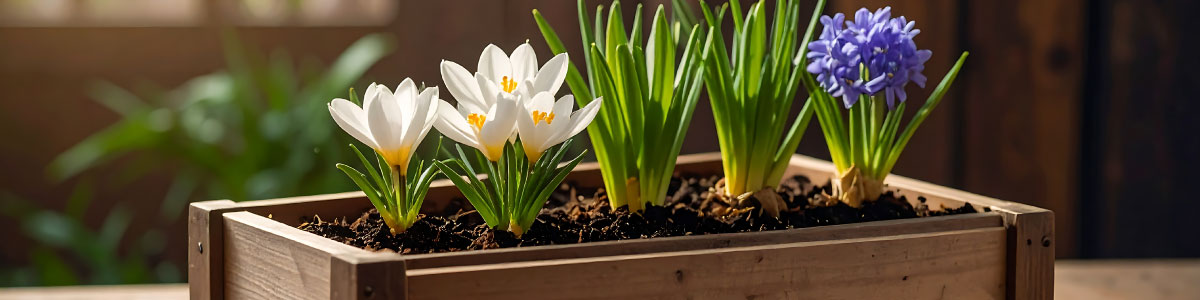
The Tender Bulbs (Indoor Only) – Bulbs occur all over the earth. Many bulbs, like tulips, need a period of cold winter weather in order to develop flower buds. Bulbs from warmer climates often require no chilling and in Truckee we grow these “tender” bulbs indoors.
Paperwhites ( Narcissus ) . Narcissus is the Genus of Daffodils and Paperwhites among others. You can grow indoor Narcissus in soil, pebbles, marbles, clay balls, or shells in bowls or vases (the roots need something to grip).
The pure white paperwhites need little more than moisture to grow and bloom. For hydroponic growing, fill the bottom of a decorative bowl, vase or jar, with 1-3 inches of your choice of medium. Soak the bulbs overnight in water. Set as many bulbs as will fit onto the medium and add a bit more. Fill with water to a level just below and not-quite-touching the bulb. Check regularly and maintain the water level or change the water if it looks (or smells) sour. Paperwhites usually bloom within 3-4 weeks. When paperwhites are done blooming they can be composted or given to someone in a climate warmer than ours (Sierra piedmont or lower).
Paperwhites sometimes grow quite tall and can tip-over just as they begin to bloom. Using a 1:7 (80 proof vodka : water) alcohol solution will produce sturdier plants that bloom with shorter, stronger stems. Water normally (with just water) for the first 7-10 days. When roots are growing well and the green shoots are 2-3” tall, begin replacing water with the alcohol solution.
The double ‘Erlicher’, golden ‘Soleil d’Or’, ‘Omri’, and the two-tone ‘Chinese Sacred Lily’ work best planted in pots, indoors, anytime from September to February. Use a pot large enough to hold 3-7 bulbs or more. Put an inch of rock or gravel at the bottom. Add enough well draining cactus potting soil to fill half the pot. Place the bulb on top and add enough soil to cover two thirds of the bulb. Keep the soil moist but not wet and increase watering when the bulb sprout begins to grow. A heat-mat that we use for seedlings will speed root formation and growth.
Growing wheatgrass in the pot for the last week gives a distinct feeling of spring to the arrangement (5-7 weeks).
October plantings might take 6 weeks while later plantings, December -February, can bloom in just 2-3 weeks. Larger bulbs give you more stems and more flowers per stem. You can store extra bulbs and bring them out every 2 weeks or so for endless crops of fragrant blooms through the winter.
Amaryllis ( Hippeastrum ) is a tender bulb from Africa and a favorite indoor bulb. Nothing compares to these beauties and their spectacular, enormous blooms on gray winter days. Everyone should grow them at least once. When the rest of the state is beginning to enjoy spring and many gardeners are tired of winter, the rich color of Amaryllis is always welcome.
The traditional large Amaryllis bulbs like ‘Red Lion’ are like cannon balls up to 8 inches across. They are easy to grow, giving you 3-12, 6-8 inch showy blooms on 2-3-4, 2 foot stalks. The smaller bulbs of miniature Amaryllis like ‘Scarlet Baby’ give you even more flowering stalks over a much longer period of time. They still yield large, 5-6 inch, scarlet flowers.
Use a pot with a diameter at least 2 inches wider than the bulb. Put an inch of rock or gravel at the bottom. Add enough well draining potting soil to fill half the pot. Place the bulb in the pot and gently add enough soil to cover two thirds of the bulb making sure to fill around the roots and under the bulb. Water thoroughly after planting and then once a week. Place the pot in a warm sunny location. Miniature varieties may bloom in as little as 3 weeks while the large varieties take 4-6 weeks to fully develop.
Re-blooming – After blooming, cut off only the spent flower heads and grow the bulb as you would any sun-loving houseplant: in a bright south or west facing window. Fertilize frequently through spring and summer. The plants will often go dormant inspite of watering, if so quit watering and let them go dry. A month or two later you’ll notice new green leaves beginning to show from the dry pot and at that point begin watering again. The bulbs will send-up flowers again each winter.
Hyacinths are not a “tender” bulb, they will grow well outdoors here. They are the most widely “forced” hardy bulb because of their compact size and ease. Most hardy bulbs must be “forced” to develop flower buds by giving them an artificial chilling period. Villager Nursery often offers “Prepared” hyacinths that have already received their chilling period and need only be planted to grow and bloom. Hyacinth yields the most enjoyable fragrance of any bulb. Even un-prepared, they will bloom indoors if simply grown in a cool room. Use a pot large enough to hold several bulbs. Put an inch of rock or gravel in the bottom. Plant so the top of the bulbs are at the soil line. Water well. Store bulbs in a cool location. Monitor the pots so they are moist but never soggy. When the green leaves are 2 inches tall, bring them into bright indirect light for blooming. Special hyacinth vases let you watch the roots grow but at our lower oxygen elevation, hyacinth roots sometimes rot so potting soil is usually the recommended medium.
If you wish to try it, in a Vase or on Rocks: place hyacinth bulbs in mouth of vase or just into gravel. Add water to a level just below and not touching the bulb. Set the vase in a cool dark place (<50°F) for ~6-8 weeks. Check regularly and maintain the water level. When sprouts are as long as the bulb, move the vase to a warmer bright spot (<65°F), avoid direct sunlight. “Prepared” hyacinths can be grown in any location.