
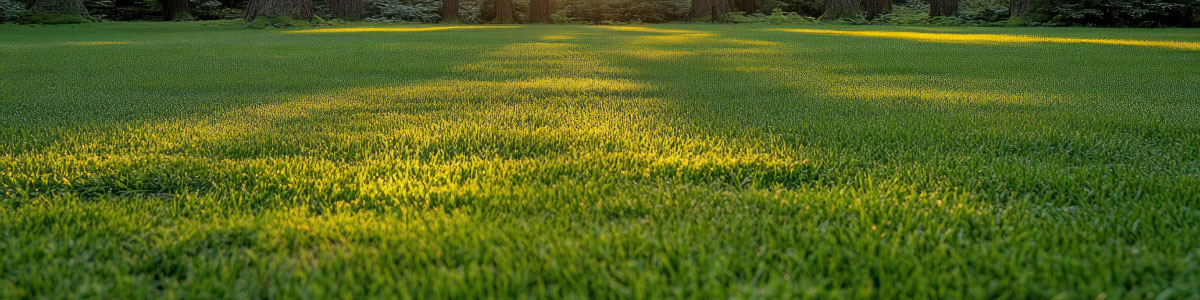
Q: What should I do to prepare my lawn for winter in the high Sierras?
A: In fall, cool-season turf-grass color and density improves (they like colder weather). Lawns often look their very best just before winter arrives. These tips will help your lawn prepare for winter and speed it’s recovery in spring. Your efforts this fall will play a key role in how well your lawn will fare next summer.
Stop your regular lawn irrigation. As cold weather intensifies, grass doesn’t need much irrigation. September through October offers a time to conserve water. Water is often wasted in the fall because irrigation controllers are not adjusted for cooler temperatures. Don’t let it completely dry-out; you may have to turn irrigation on manually, occasionally.
Prepare for a final mowing. As the weather gets cooler, your lawn will grow more slowly. At some point (usually late October), you will mow your lawn one last time. At our homes, we usually bag these clippings mixed with pine needles and leaves and compost them (perfect green/brown ratio) or spread them broadly below our trees and shrubs. This is a critical time for the health of your lawn. An appropriate mowing height of 3 – 3 1/2 inches (along with mulched clippings) promotes root growth and stress tolerance during summer, but your final mowing height of the season should be much shorter. A mowing height of 2 inches can reduce the slight chance of disease under snow. Grass blades left too long lie over under the snow and may increase chances of disease. I lower the mower deck a little in mid-October and again at the very end.
Apply high nitrogen fertilizer after your final mowing. It seems counter-intuitive but, with cool-season turf in cold climates, this is the best time to apply a last quick-releasing, high-nitrogen lawn feeding. Apply one quarter to one half pound of total nitrogen per thousand square feet of lawn (some recommend up to 1 lb. / 1000 sq.ft.). Irrigate thoroughly after applying fertilizer. It is important to use a quick-release nitrogen source so that grass can take it up before going dormant when the soils freeze. (.25 lb/1000sq.ft.=: Urea 46-0-0 [.55 lb.], Calcium Nitrate 15.5-0-0 [1.6 lb.], and Ammonium Sulfate 21-0-0 [1.2 lb.] ). Research has shown that this late fall fertilization provides huge benefits by increasing carbohydrate storage for winter. This stored energy greatly improves root vigor and drought tolerance next summer. You can alternatively use an organic lawn fertilizer (G&B or Biosol) which release some nitrogen in fall and more in spring.
Fall aeration with a “plugger” type deep-tine aerator in fall is highly recommended for sod. It allows for better water and oxygen infiltration to the roots through the often too-dense clay layer.
Fall compost topdressing with Kellogg’s Topper can provide many additional benefits. Topper adds humus and composting microbes that help break-down dead grass clippings to make soil.
MOST IMPORTANT: Apply Biosol after the soil begins to freeze (usually early to mid November). While Biosol can be applied safely ANY time of year, we’ve seen incredible vole repellency on lawns when it is applied after irrigation has completely ceased so that the pellets can persist and slowly break-down over winter under the snow. Biosol provides a very long-lasting, slow-releasing fertilization that will become available in spring through summer. Biosol also improves soils by feeding beneficial microorganisms and by improving soil structure with humic acids. Many use a heavier rate of Biosol on the perimeter of the lawn (as repellent) and the normal rate of 25. lb. / 1000 sq.ft. throughout the rest of the lawn, the perennial gardens and under all trees and shrubs. Biosol is organic and it may stink a little (when applied), but it rocks! It is our favorite fertilizer for ALL purposes. Some dogs love it.
These simple activities greatly improve the odds that your lawn will survive the winter and emerge healthy and strong from under the snow and well into next summer.